
Blog
What Exactly Is a Forced Reset Trigger and How Does It Work?

Forced Reset Trigger Explained: How FRTs Work, Legality, and What Shooters Need to Know
A forced reset trigger is the definitive upgrade that transforms a standard semi-automatic rifle into a platform firing at near-full-auto speed with a single pull. By mechanically harnessing the recoil impulse to reset the trigger while the shooter’s finger remains pressed, it cycles each shot faster than humanly possible, delivering unmatched controlled bursts. This system boosts your rate of fire without altering the firearm’s legal classification, and mastering the two-stage pull—press, hold, let the bolt reset, then release—unlocks devastating precision in rapid succession.

What Exactly Is a Forced Reset Trigger and How Does It Work?
A forced reset trigger (FRT) is a drop-in replacement for your rifle’s standard trigger group, but it changes the mechanical sequence of the shot cycle. Unlike a binary trigger, which fires on pull and release, an FRT uses the bolt carrier’s rearward travel to physically push the trigger shoe forward, resetting the sear without you letting go of the finger. That forward motion is the “forced reset.” As the bolt slams forward again, the trigger is ready to break, so you simply apply pressure again—creating a rapid, controlled cadence that mimics full-auto without altering the receiver’s fire control group legality. The key nuance is that your finger never loses contact: you maintain constant rearward pressure, and the mechanism does the reset work for you, which takes practice to master because the recoil impulse can trick you into lifting off the trigger. Once you learn to stay limp-wristed and let the gun drive, the FRT shines as a training tool for trigger discipline under cyclic stress.
Breaking Down the Mechanics: Where the Trigger Resets Itself
The reset point in a forced reset trigger is defined by the shooter’s forward pressure, not by the sear alone. After the hammer falls, the bolt carrier’s rearward travel compresses the trigger’s reset lever, forcing the trigger shoe forward—this is the **self-resetting trigger mechanism** in action. You feel the reset as a positive click at the exact moment the carrier moves forward again, which occurs roughly 0.1 inches before the bolt fully chambers a round. Releasing finger pressure at this micro-window allows the sear to re-engage, while holding it back blocks the reset entirely, causing a dead trigger. The trigger resets itself only when the carrier’s forward stroke pushes the lever past the sear’s catch, so timing your release with that forward travel—not the trigger’s internal spring—is the critical mechanic. Any delay past that click requires a manual release, breaking the forced-reset cycle.

How It Differs from a Binary Trigger or Full-Auto Kit
A forced reset trigger differs from a binary trigger because it only fires one round per trigger pull, whereas a binary fires on both the pull and the release of the trigger, effectively doubling your shot count without altering the gun’s mechanical cycle. Unlike a full-auto kit, which relies on an external sear or modified bolt to continuously cycle as long as the trigger is held, a forced reset trigger uses the firearm’s own recoil energy to physically push the trigger forward, resetting it for a single follow-up shot. This means you must manually release and re-pull for each subsequent round, preserving semi-automatic legal functionality while simulating a faster cadence. The key difference is that a forced rare breed trigger reset doesn’t alter the firing sequence’s initiation—only the reset speed—so it lacks the sustained fire capability of full-auto and the dual-shot per pull of a binary. This makes it a trigger speed enhancer, not a fire-rate multiplier.
Key Benefits You Actually Get from Installing One
A forced reset trigger delivers a tangible benefit: a measurable reduction in split times between shots without altering the firearm’s semi-automatic classification. You gain a more consistent trigger reset point, which eliminates the need to fully release the trigger between rounds—your finger only travels a short, predictable distance before the sear re-engages. This translates to faster follow-up shots with less shooter-induced movement. Because the bolt’s forward motion physically resets the trigger, you also receive a tactile and audible reset cue that is far more distinct than a standard trigger.
The key insight is that you retain legal semi-auto reliability while achieving a firing rhythm closer to binary or full-auto feel, but only if your upper’s bolt carrier group has sufficient mass and velocity to cycle the reset mechanism reliably.
In practice, you get improved accuracy at speed, as your grip and sight alignment remain undisturbed by a heavy, long trigger pull.
Faster Follow-Up Shots Without Changing Your Grip
The primary advantage of a forced reset trigger lies in its capacity for faster follow-up shots without changing your grip. Because the trigger mechanism physically returns to its forward position under spring force, your trigger finger is pushed back out automatically, eliminating the need to consciously release and reset. This allows you to maintain a consistent, stable firing stance; your support hand and firing hand never shift or readjust between rounds. The forced reset creates a predictable cadence, so you can keep your sights aligned on target without breaking your shoulder weld or losing your cheek weld. For practical shooting, this translates directly to tighter shot groupings and reduced split times, as the only movement required is a deliberate, sustained press.

Why Some Shooters Say It Feels Like a Two-Stage Bump
Because the forced reset trigger’s mechanical cycling splits your pull into two distinct, tactile stages, shooters often mistake it for a bump-fire technique. The first stage is a crisp, deliberate take-up that forced reset trigger super safety mirrors a standard trigger’s wall. As the bolt cycles forward, the reset slams the sear against your finger, creating a firm, spring-loaded push-back that feels like a second trigger break. This physical rebound—not a finger twitch—produces a rapid, rhythmic pulse: press, bump, press, bump. Unlike a true two-stage trigger, the second movement isn’t adjustable, but the sensation of a hard stop followed by an automatic return is so pronounced that your brain interprets it as two separate trigger pulls per shot.

The Training Advantage for Trigger Control and Reset Discipline
The forced reset trigger transforms your grip into a live feedback loop, sharpening trigger control and reset discipline with every shot. Because the bolt slams forward and forces the trigger to reset automatically, you must maintain constant, deliberate finger pressure—any flinch or premature release breaks the cycle. This teaches you to hold the trigger through the entire recoil impulse, a skill that transfers directly to precision shooting. You learn to anticipate the scar frt trigger exact reset point, building muscle memory for rapid, controlled follow-ups. The mechanical urgency eliminates lazy finger habits, forcing you to manage each pull with surgical consistency. Over time, your trigger finger becomes conditioned to ride the reset instinctively, improving accuracy under speed.
Step-by-Step: How to Install and Fit the Trigger System Yourself
Begin by clearing the lower receiver and ensuring the hammer is decocked. For a forced reset trigger installation, remove the factory trigger group entirely, then insert the new cassette-style unit from the underside of the receiver. Align the pin holes precisely—do not force pins; use a roll pin punch to seat them flush. Next, fit the trigger shoe and reset spring per the included diagram, verifying the sear engages with an audible click. After assembly, function-test by charging the bolt: the trigger must reset automatically without manual assistance. If the pull frt-15l3 feels gritty, polish the contact points with fine stone. Step-by-step trigger fitting requires torquing the hammer pin to spec—typically 25 in-lbs—to prevent timing drift. Finally, dry-fire repeatedly to confirm the forced reset cycles cleanly every time before live-fire testing.
Tools You’ll Need and How to Prep Your Lower Receiver
Before touching your lower, gather a bench block, roll pin punch set, hammer, and a quality Allen key set—these are the non-negotiables for a clean install. Prep begins by clearing the receiver completely, then inspecting the trigger pin holes for burrs. Use a fine file or sandpaper to lightly chamfer the edges, ensuring the pins won’t bind. Degrease the pocket with brake cleaner and let it dry; a dry surface prevents grit from scoring the sear surfaces. For forced reset trigger prep precision, verify the hammer pocket is free of polymer flash, especially around the rear lug area. Test-fit the trigger pack dry before pinning—if it drops in without resistance, you’re ready to proceed.
Q: What’s the most common mistake when prepping a lower for a forced reset trigger?
A: Skipping the deburring step—sharp edges on the pin holes will drag against the trigger’s axle, creating false reset feel. Always chamfer and polish those holes first.
Common Fitment Issues and How to Fix the Trigger Pin Walk
During forced reset trigger installation, the most frequent fitment issue is trigger pin walk, where the pins migrate laterally under recoil. This occurs when the trigger housing’s pin channels are oversized or the pins lack positive retention. First, verify that the pins are the correct diameter for your lower receiver—using a pin gauge can reveal 0.001-inch slack. If walk persists, apply a high-viscosity threadlocker to the pin’s grooved section, or replace standard pins with anti-walk pins that include set screws. For a quick fix, temporarily install a tension pin in the fire control pocket’s rear hole to lock both pins. Finally, after assembly, cycle the action manually to confirm pins remain flush.
Testing Function Safely Before Loading Any Ammunition
Before introducing live rounds, verify the forced reset trigger’s dry-fire cycle with the upper receiver separated from the lower. Manually retract the bolt carrier group and release it to confirm the trigger resets fully and the hammer follows the carrier’s forward motion without sticking. Next, reassemble the firearm, clear the rare breed mp5 frt chamber, and function-check the safety selector in both safe and fire positions while pulling the trigger—the hammer must not drop when the safety is engaged. Finally, cycle snap caps through the magazine by hand-racking the charging handle, ensuring the trigger trips each time and resets audibly. Any hesitation, double-fire, or weak reset indicates a problem that requires disassembly and adjustment before you proceed further.
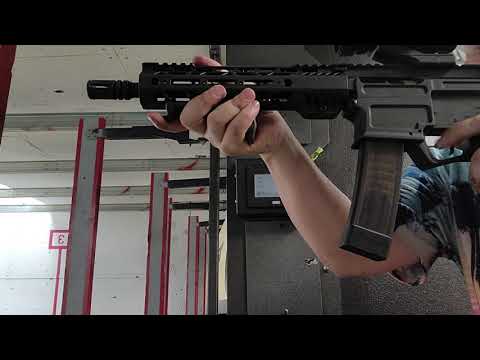
Test every reset and safety interaction with the action empty; only after flawless dry-fire and snap-cap cycles should you consider loading ammunition.
Choosing the Right Unit for Your AR-15 or Pistol Caliber Build
When picking a forced reset trigger for your AR-15 or pistol caliber build, match the unit’s reset force to your buffer weight and gas system. A lightweight PCC with a heavy bolt needs a stronger reset spring, while a tuned AR-15 prefers a lighter unit to avoid hammer follow. Check the hammer geometry—some FRTs won’t clear 9mm carriers or AR-9 bolts without modification. Also, verify your lower’s trigger pocket depth; billet lowers with tighter tolerances can bind the mechanism. Test with your actual upper before buying, because a unit that runs on a 16-inch carbine may choke on a 10.5-inch pistol gas setup. Q: What’s the biggest mistake? A: Assuming one FRT fits all calibers—blowback PCCs need a different reset profile than direct impingement rifles. Stick with brands that offer caliber-specific springs, and dry-fire with a snap cap to feel the break-in cycle before hitting the range.

What to Look for in a Drop-In Trigger vs. a Gun-Specific Kit
When evaluating a drop-in trigger versus a gun-specific forced reset kit, first inspect the interface geometry between the hammer and bolt carrier, as drop-in units rely on universal dimensions that may misalign with your bolt’s cam path, causing premature reset or slam-fires. A gun-specific kit, conversely, includes a tailored disconnector profile and spring rate matched to your firearm’s receiver tolerance, ensuring consistent reset timing under rapid fire. Verify whether the drop-in’s housing accommodates your safety selector’s detent channel, since aftermarket housings often shift the trigger shoe’s travel, altering pull weight m249s binary trigger unexpectedly. For pistols, confirm the kit’s trigger bar does not interfere with the magazine disconnect; otherwise, you will sacrifice reliability for speed. Prioritize units with adjustable over-travel stops, as forced reset systems amplify any slack into felt recoil.
Spring Weights, Hammer Profiles, and How They Change the Feel
In a forced reset trigger, spring weights and hammer profiles directly shape reset speed and perceived pull weight. Heavier trigger return springs increase reset force, making the break feel crisper but adding resistance that can fatigue the finger during rapid fire. Lighter springs reduce that push-back, yielding a softer, faster reset that suits competitive shooting but risks short-stroking if the bolt carrier group is sluggish. Hammer profiles matter equally: a lightweight, skeletonized hammer reduces rotational mass, allowing the sear to re-engage quicker, which sharpens the reset’s tactile snap. Conversely, a full-mass hammer slows the cycle, producing a more deliberate, drawn-out reset that feels mushy at high round counts. Pairing a medium spring with a flat-faced hammer gives the most predictable, repeatable trigger feel, while a curved profile shifts finger contact, subtly altering perceived take-up and reset length. Tuning these two variables lets you balance between a snappy, race-ready action and a forgiving, duty-style pull.
Compatibility Checks: Which Bolt Carriers and Upper Setups Work Best
For forced reset trigger reliability, bolt carrier and upper setup compatibility hinges on carrier weight and gas system alignment. Standard mil-spec carriers (M16 profile) work best with carbine-length gas systems, as their inertia helps the FRT reset cleanly. Lightweight or skeletonized carriers are prone to bolt bounce, causing trigger reset failure—avoid them unless you pair with a heavier buffer (H2/H3). Upper setups with tight ejection port spec and correct cam pin clearance are critical; a slightly oversized cam pin channel can drag, slowing carrier cycle and inducing double fires. For piston uppers, tested compatibility is rare—stick to DI. If using a pistol-caliber build, ensure the carrier’s bolt face depth matches your magazine’s feed angle, or the FRT’s trip lug will misfit. Always verify your upper’s barrel extension alignment with the carrier’s gas key; any misalignment disrupts the forced reset stroke.
Frequently Asked Questions About Using a Self-Resetting Trigger
When shooters first ask about a **forced reset trigger**, the most common question is why the trigger face slams forward after each shot—it’s not a malfunction, it’s the mechanism physically pushing your finger off the sear. Another frequent query is whether you can ride the reset for faster follow-ups; with a self-resetting trigger, you must fully release and re-press, since the reset is aggressive and unforgiving. Users often wonder if dry-fire practice damages the system, and the answer is no, but you’ll feel the jarring reset that mimics live recoil. Finally, everyone asks if their standard bolt-release or safety still works—yes, but the trigger’s travel cannot be short-stroked, or you’ll get a dead trigger. Master that full release, and the **self-resetting trigger** becomes predictable, not frustrating.
Is It Legal in My State or Under Federal Classification Rules?
The legality of a forced reset trigger hinges on your exact state statutes and the ATF’s current classification ruling for that specific model. Before purchase, verify whether your state bans “trigger activators” or devices that increase rate of fire beyond semi-auto definitions—many do, regardless of federal status. Under federal rules, the ATF evaluates each design individually, often deciding that a resetting trigger does not constitute a machinegun if it requires a fresh pull for each shot, but this can change with reclassification. Even a prior approval letter can be revoked, so check the latest ATF guidance before relying on that document. If your state uses its own “machinegun” definition broader than federal law, state law wins. Always confirm both your state’s firearm code and the ATF’s most recent ruling for the exact part number you intend to use.
Will It Damage My Firearm’s Bolt or Trigger Group Over Time?
With a forced reset trigger, the concern about component wear is common, but the answer depends on your firearm’s design. The trigger group itself typically avoids abnormal stress because the reset mechanism redirects energy rather than adding impact. However, the bolt carrier can experience accelerated wear if your rifle lacks a properly tuned buffer system, as the abrupt forward movement increases bolt velocity. Over time, this may cause earlier peening on the lug contact points, but it won’t shatter the bolt unless your setup is drastically under-buffered. Long-term bolt and trigger durability hinges on using a heavier buffer and a quality hammer spring, which absorb the cyclic shock. Inspect your carrier’s finish every 1,000 rounds for unusual galling—if none appears, you’re likely safe.
Can I Still Use a Standard Safety Selector and Manual of Arms?
Yes, you can typically retain your standard safety selector, but the forced reset trigger’s altered trigger geometry changes how the manual of arms feels. The safety still blocks the trigger bow in “Safe,” preventing any discharge, so basic manipulation remains unchanged. However, the selector’s function after firing is identical—you can engage it with your shooting thumb as usual. The real difference is the reset: a self-resetting trigger returns the trigger forward instantly without releasing it, so your manual of arms should eliminate the “release-to-reset” step. Instead, you simply pull, hold, and ride the trigger for the next shot, keeping your finger on the trigger longer than with a standard trigger. This requires deliberate practice to avoid accidental follow-throughs. Adapting your manual of arms for a forced reset trigger is essential for safe, controlled fire.
Q: Can I still use a standard safety selector and manual of arms with a forced reset trigger?
A: Yes, the safety selector itself works normally, but your manual of arms must change—you no longer release the trigger to reset; you hold and pull again, so avoid training habits that involve lifting your finger off the trigger between shots.