
Blog
Choosing the Right Cartridge for Your Rifle’s Purpose

The Best Rifle Ammo for Every Hunter and Shooter
Rifle ammo is the heart of precision and power, transforming a firearm into a reliable tool for distance and accuracy. Each cartridge combines a precisely measured propellant, a seated bullet, and a primer that ignites on impact, working together in a controlled sequence to send the projectile downrange. Choosing the right grain weight and bullet type lets you tailor your shot for clean expansion on game or tight groupings at the range, making every pull of the trigger a thoughtful, confident act. Handle it with care and respect, and it will reward you with consistent performance when you need it most.

Choosing the Right Cartridge for Your Rifle’s Purpose
Selecting the right cartridge is the single most critical decision for your rifle’s effectiveness, and it must hinge entirely on your defined objective. For varmint hunting, a flat-shooting, high-velocity round like .243 Ammo for Sale the .223 Remington ensures minimal pelt damage and precise shot placement. Conversely, if your purpose is taking large, heavy-bodied game like elk or moose, you need a cartridge with significant downrange energy and penetration, such as the .300 Win Mag or .45-70 Government, to ensure a clean, ethical kill. For precision target shooting, prioritize inherently accurate, match-grade cartridges like the 6.5 Creedmoor, which offers excellent ballistic coefficients and low recoil for consistent follow-up shots. Ultimately, matching the cartridge’s power and ballistic profile directly to your specific hunting or shooting scenario guarantees superior performance and reliability. **Choosing the right rifle ammo** is not about generalization but about precise, purpose-driven selection. This tailored approach is the cornerstone of **successful cartridge selection for any shooter.
Matching Bullet Weight and Velocity to Your Target Type
For varmints and small predators, match a lightweight, high-velocity bullet—think 40–55 grains in .223—to explode on impact and minimize pelt damage. Medium game like deer demands a heavier, tougher projectile (140–180 grains in 7mm or .30 cal) that retains energy for deep penetration without over-expanding. On large, thick-skinned animals, prioritize sectional density over speed, using 200+ grain bullets at moderate velocities to ensure straight-line bone breaking. Conversely, long-range target shooting favors sleek, heavy-for-caliber bullets with high ballistic coefficients, sacrificing initial velocity for wind drift resistance and retained downrange speed. Critically, match terminal performance to tissue density: fragile targets need shock, robust targets need penetration, and paper needs precision, not power.
Heavier bullets penetrate; lighter bullets fragment—always align weight and velocity with 7.62 Tokarev Ammo for Sale the target’s size and desired effect.
Understanding Caliber vs. Cartridge Differences Before You Buy
Before buying rifle ammo, grasp the core distinction: **caliber is the bullet’s diameter** (a measurement), while cartridge is the complete unit—case, primer, powder, and bullet—designed for a specific chamber. A .308 Winchester and a 7.62×51mm share a similar caliber but are different cartridges with pressure variations. Never assume interchangeability based on caliber alone. Check your rifle’s barrel stamp and manual to confirm the exact cartridge. Mismatching a cartridge can cause dangerous pressure spikes or poor accuracy. For hunting, choose a cartridge’s terminal performance; for target, its ballistic consistency. The caliber tells you size, but the cartridge dictates fit and function.
- Caliber is a bore dimension; cartridge is the loaded round’s full specification.
- Same caliber can exist in multiple cartridges with different case lengths 7.5×55 Swiss Ammo for Sale and pressures.
- Always verify chamber markings, not just bullet diameter, before purchasing.
How Barrel Twist Rate Dictates the Best Bullet Grain
Barrel twist rate, expressed as a ratio like 1:10, defines the rotational speed imparted to a projectile; faster twists stabilize longer, heavier bullets, while slower twists favor shorter, lighter ones. Heavier grains demand greater spin to overcome their length and maintain gyroscopic stability in flight, so a 1:7 twist commonly handles 77-grain loads, whereas a 1:12 twist may keyhole with anything above 55 grains. Conversely, pairing a lightweight bullet with an excessively fast twist risks over-stabilization and potential jacket stress at high velocities. Ammunition manufacturers typically list recommended twist ranges on bullet boxes, making that spec your primary filter before testing. Therefore, your rifle’s twist rate is the non-negotiable starting point for selecting bullet weight, not your load manual’s velocity table alone.
- Faster twist (1:7–1:8) best for 69–77 grain match bullets.
- Slower twist (1:10–1:12) optimal for 40–55 grain varmint rounds.
- Mid-range twist (1:9) suits 62–68 grain general-purpose projectiles.
- Always verify twist length via a cleaning rod and tight patch before buying bulk ammo.
Reading a Box of Cartridges Like a Pro
To read a box of rifle ammo like a pro, start by ignoring the brand hype and verifying the cartridge headstamp vs. the box label—a mismatch means mismanufactured lots. Check the bullet weight (grains) and the exact load designation, as a 150-grain soft point and a 150-grain boat-tail will print differently at 300 yards. Next, scrutinize the lot number; two boxes of the same SKU from different lots can shift your zero by up to an inch. For precision work, confirmed by chronograph data, stick to a single lot or blend new with fired brass. Finally, inspect the primer sealant: a ring of red or green lacquer indicates a waterproofed, crimped primer—ideal for hunting. The true pro reads the velocity (fps) listed, not the muzzle energy, because that number tells you the bullet’s trajectory and wind drift. Ignore marketing claims; trust the lot number and the bullet’s ballistic coefficient, which is the ultimate key to reading a box of cartridges like a pro for your specific rifle’s twist rate.

Decoding Muzzle Velocity and Energy Figures on the Label
The muzzle velocity figure, typically listed in feet per second, represents the projectile’s speed at the barrel’s exit, and this number is the foundation for calculating energy. The energy, usually in foot-pounds, is derived from that velocity and bullet weight, showing the terminal impact potential at the source. However, these are not constant values; they are measured from a specific test barrel length and atmospheric condition, which often differ from your rifle. A shorter barrel will reduce velocity, while a longer one may increase it, and temperature affects powder burn, shifting 6mm Creedmoor Ammo for Sale both figures. Therefore, treat these numbers as a comparative baseline for selecting loads, not as absolute chronograph predictions for your specific setup.
What Ballistic Coefficient Means for Downrange Performance
The ballistic coefficient (BC) directly dictates how efficiently a bullet slices through air, which is the single biggest factor in your downrange trajectory. A higher BC means the projectile retains velocity better, so it drops less over distance and bucks crosswinds more stubbornly. This translates to a flatter shooting arc, meaning less holdover adjustment when you dial in for a 500-yard shot. Crucially, a high BC also preserves terminal energy—the bullet arrives harder and expands more reliably. For practical hunting or long-range work, the BC tells you whether your bullet will still be effective at extended ranges or if it will dramatically lose steam.
Identifying Bullet Construction: Soft Point, Boat Tail, or Full Metal Jacket
To identify bullet construction, inspect the projectile’s exposed base and tip. A soft point (SP) reveals a lead tip with a copper jacket that stops short, promoting controlled expansion—ideal for hunting. A boat tail (BT) is recognized by a tapered, sloping base that reduces drag and improves long-range stability, often combined with SP or FMJ designs. A full metal jacket (FMJ) shows a completely encased lead core with only the base exposed, typically a flat or slightly concave surface, offering deep penetration without expansion. Check the box’s label and visually confirm the profile: .260 Remington Ammo for Sale rounded lead tip for SP, angled heel for BT, and uniform copper coverage for FMJ.
| Feature | Soft Point (SP) | Boat Tail (BT) | Full Metal Jacket (FMJ) |
|---|---|---|---|
| Tip | Exposed lead | Varies (often SP or FMJ) | Fully jacketed |
| Base | Flat | Tapered | Flat or concave |
| Primary Use | Expansion | Aerodynamics | Penetration |
Practical Tips for Storing and Handling Your Supply
Keep your rifle ammo in its original box or a dedicated ammo can, and always store it in a cool, dry place—think a closet or basement shelf, not a hot garage. Rotate your supply by using the oldest rounds first, so your shooting stays consistent and nothing ages unevenly. Handle rounds by the case, not the bullet tip, to avoid denting the brass or shifting the projectile. If you’re loading magazines for a range day, don’t leave them compressed for weeks; that can weaken springs and distort rounds.
Wipe off any oil or solvent before loading, since bulk ammo for sale liquids can seep into primers and cause misfires.
Finally, check for corrosion or cracks before every session—discard anything questionable without hesitation.
Keeping Powder and Primer Stable in Extreme Temperatures
When mercury spikes, leave powder and primers out of direct sun—a hot car dashboard turns a stable load into a pressure gamble. Conversely, freezing temps won’t detonate your components, but rapid thawing can create condensation that degrades nitrocellulose. The 6mm ARC Ammo for Sale rule is thermal inertia: store them in a cool, dark, consistent space, like a basement or insulated ammo can, far from furnace vents. Always let chilled ammo acclimate slowly to room temperature before shooting, as cold primers can misfire. For extreme temperature ammo storage, invest in a sealed container with silica gel to lock out humidity shifts.
Stable powder and primers demand consistent, moderate temperatures, slow temperature transitions, and airtight, moisture-free containers—never rapid swings.
Rotating Your Stock to Avoid Corrosion and Moisture Damage
To keep your rifle ammo reliable, rotating your stock to avoid corrosion and moisture damage is the single most effective habit you can adopt. Ammo stored too long without movement traps micro-humidity against the brass, inviting green oxidation and primer failure. Follow this simple sequence: first, mark every new purchase with the month and year on the box. Then, place newer rounds at the back of your ammo can, pushing older cartridges to the front. Every three months, pull the oldest rounds, fire them at the range, and immediately restock with fresh factory loads. Finally, avoid opening the can mid-winter—warm air condenses inside. Instead, rotate only when the ambient temperature matches your storage room. This constant flow guarantees you never shoot corroded or compromised cartridges.
Spotting Signs of Deterioration Before Loading the Magazine
Before seating a single round into your magazine, give each cartridge a decisive once-over for signs of ammunition deterioration. Check the primer pocket for corrosion, which often appears as a white or green crust that can hinder ignition. Feel the case neck for cracks or splits that compromise bullet tension, and run your thumb along the bullet’s base for any wiggle. Look for deep scratches, dents, or discoloration on the brass—these are stress risers that can fail under chamber pressure. If a cartridge looks dull, tarnished, or smells faintly of ammonia, discard it immediately; your rifle deserves clean, sound fodder.
- Inspect primers for pitting or residue that could cause a hangfire.
- Roll the cartridge on a flat surface; a wobble indicates a deformed case.
- Press the bullet tip gently—any movement means the case neck has lost grip.
- Reject rounds with green or black patina around the case mouth.
Zeroing Your Scope for Specific Ammunition Loads
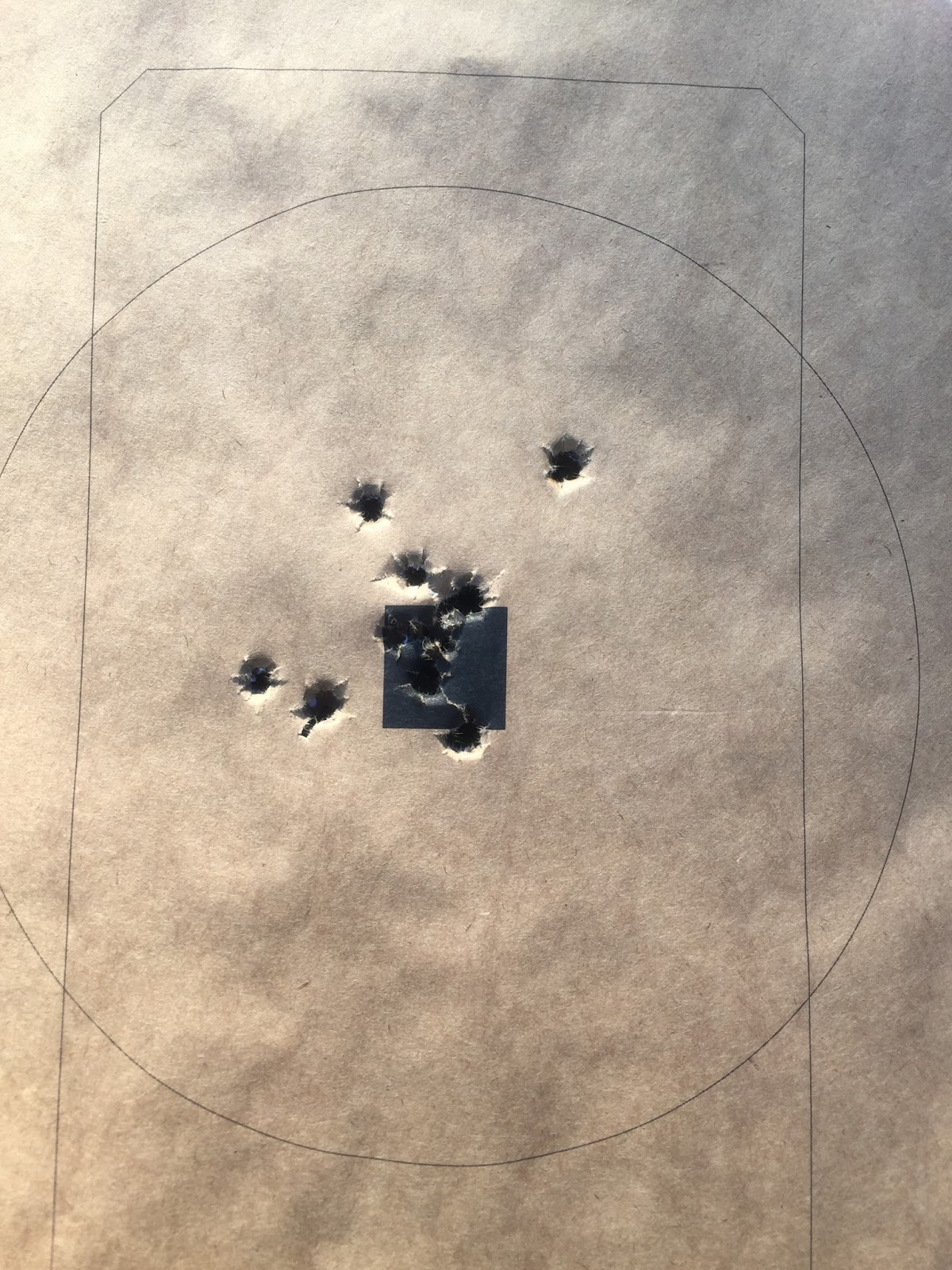
Zeroing your scope for a specific ammunition load is non-negotiable because different rifle ammo—even same-grain bullets from different manufacturers—will shift your point of impact due to variations in velocity, ballistic coefficient, and pressure curves. You must fire a three-shot group at your chosen distance (100 yards is standard), let the barrel cool, and then adjust turrets to move the group’s center to the crosshair. Never assume a new box of ammo will hold the same zero; always re-confirm, as even lot-to-lot changes can drift impact by an inch or more at 100 yards. For example, if you switch from a 140-grain to a 150-grain load, your bullet’s trajectory flattens or drops differently beyond 200 yards, so you’ll need to re-zero and then log your click adjustments per load. Q: How many shots should you fire to zero for a new ammo load? A: At least three—five is better—to ensure a reliable group center, not a flier-based false zero. Keep a dedicated dope card for each specific ammo brand and weight.
Adjusting for Bullet Drop at Different Yardages
Once your rifle is zeroed for a specific ammunition load, adjusting for bullet drop at different yardages demands a precise, load-specific approach. Because each cartridge’s ballistic coefficient and velocity dictate .223 Ammo for Sale a unique trajectory, you must dial or hold over based on your exact data, not generic charts. First, confirm your 100-yard zero, then record the drop in inches or milliradians at 200, 300, and 400 yards using that same lot of ammo. Next, apply those values to your turret adjustments, accounting for scope click value and magnification. Finally, verify each setting with live fire. Mastering trajectory compensation ensures your point of impact matches your point of aim at every distance, eliminating guesswork when the shot matters.
Compensating for Wind Drift Using Ammo-Specific Data
To truly master long-range accuracy, you must treat wind drift as a ballistic variable unique to each cartridge, not as a universal constant. Ammo-specific wind drift data—derived from your load’s ballistic coefficient and muzzle velocity—lets you calculate precise wind holds before you fire. Start by recording your bullet’s drift in inches at 100-yard increments for a 10 mph crosswind. Then, for a 5 mph or 20 mph wind, scale that value proportionally. Finally, convert inches to milliradians or MOA using your scope’s click value. Without this load-specific chart, you are guessing, not compensating.
- Chrono your actual ammo to get true muzzle velocity, not box data.
- Compute drift per 100 yards using a ballistic solver or manual formula.
- Build a laminated wind-drift card taped to your stock for field reference.
Why Switching Brands Requires a Fresh Zeroing Session
Switching brands is never a “close enough” scenario; each manufacturer’s bullets, brass, and powder charges produce distinct pressure curves and velocities. Your current zero is tied to that specific cartridge’s ballistic fingerprint, so a new brand will likely shift your point of impact at 100 yards, often by 1–3 MOA. Even two loads with identical bullet weights can print differently due to varying seating depths and jacket alloys. Skipping this step invites missed shots in the field or on steel. Always confirm zero with fresh targets and chronograph data before trusting the new ammo. Fresh zeroing validates the new load’s true trajectory and prevents wasted range trips.
A zero is load-specific; changing brands demands a new session to map its unique point of impact.
Extracting Maximum Accuracy from Every Single Round
Each cartridge carries a story of precision, and coaxing that final fraction of an inch demands ritual. I weigh every charge, sort cases by neck thickness, and seat bullets with a concentricity gauge, because a 0.002-inch runout turns a tight group into a shotgun pattern at 300 yards. The brass’s neck tension—consistent, not over-crimped—holds the bullet’s start pressure steady, while a clean, slightly rough chamber throat lets the ogive engage identically round after round. You shoot in calm air, cool the barrel between shots, and trust the powder’s burn curve, not your chronograph’s flattery. Can temperature swing send your point of impact wandering? Yes—a 20°F shift can alter velocity by 30 fps, so I zero at the season’s typical temp and recheck if the day feels different. That stubbornness—checking every loaded round’s length and weight—turns a good rifle into a boringly faithful one.
Cleaning Your Bore to Match a New Lot of Ammunition
When switching to a new lot of rifle ammunition, your bore’s existing carbon and copper fouling profile can shift zero and group size due to altered bullet-jacket hardness or propellant residue. Before firing for accuracy, perform a full solvent-based copper removal, then a dry patch pass. This resets the friction coefficient, preventing erratic velocity from the fresh lot. Fire three fouler shots to lay down a uniform base layer from the new ammo, then verify your cold-bore zero. Match the cleaning solvent to the previous lot’s fouling type; a mismatched bore can add vertical stringing. Bore conditioning for a new ammunition lot is a mandatory step, not optional.
Q: How many fouling shots after cleaning for a new lot?
A: Typically three, but re-clean if the fourth shot’s point of impact shifts more than 0.3 MOA from the third.
Testing Multiple Lots to Find the Most Consistent Fliers
To isolate consistent fliers in rifle ammo, you must test multiple lots from the same manufacturer, not just one box. Buy three to five lots of the identical bullet, powder charge, and primer, then fire five-shot groups from a rested platform at your longest practical distance, say 100 yards. Record each lot’s group size and, crucially, the vertical and horizontal spread of every shot. One lot may print a tight cluster with a single wild flyer, while another shows a ragged but evenly distributed pattern—the latter is more predictable for scoring. Re-zero for each lot, and fire the same number of fouling shots between changes. Rank lots by extreme spread (ES), not average group size, because ES reveals that flier’s deviation. After three repetitions per lot, discard any batch with an ES over 1.5 MOA, and keep only the lot that repeats its tightest group across all sessions. That lot’s fliers become inherent to your rifle’s harmonic signature, allowing you to compensate by adjusting your hold or scope parallax.
Q: How many rounds per lot are needed to reliably identify consistent 9x23mm Winchester Ammo for Sale fliers?
A: Minimum 30 shots per lot, split into six five-round groups across different days and temperatures. This surfaces thermal and barrel-condition fliers that a single session misses, letting you spot the lot where fliers consistently group in the same location instead of scattering randomly.
Using a Chronograph to Verify Real-World Speed vs. Box Claims
Box velocities are optimistic averages from a test barrel, not your rifle. A chronograph eliminates guesswork by measuring real-world muzzle velocity through your specific barrel length, chamber, and environmental conditions. Set the unit three to five feet .22-250 Ammo for Sale downrange to avoid muzzle blast interference. Shoot a five-round string, record the standard deviation, then compare it to the box claim. If your average runs 80–120 fps slower, that’s normal—but it changes your bullet’s trajectory, so re-check your ballistic solver’s inputs. For precision work, verify at two temperature extremes: velocity shifts with powder temperature. Finally, use the chrono data to confirm your drop table matches at 100, 200, and 300 yards. The chronograph turns a marketing number into your personal, actionable ballistic truth.